A Familiar Face
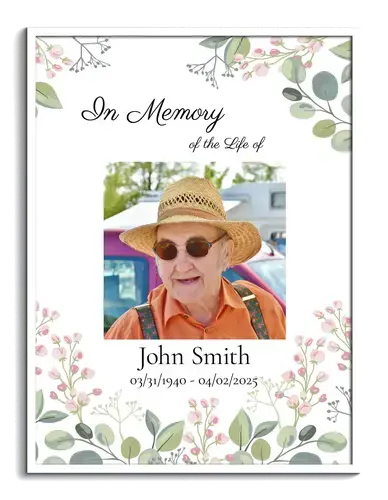
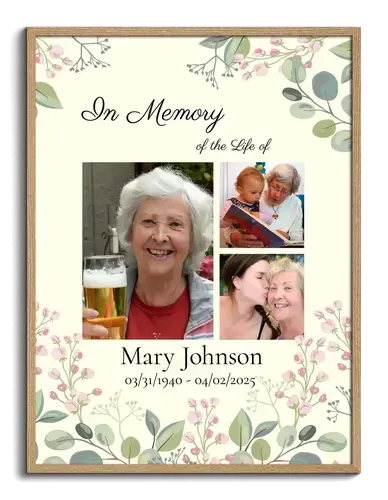
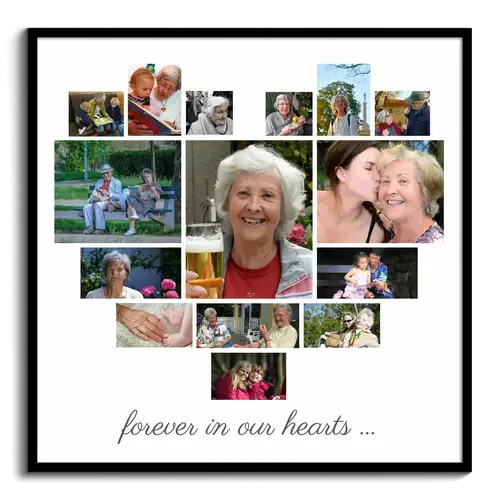
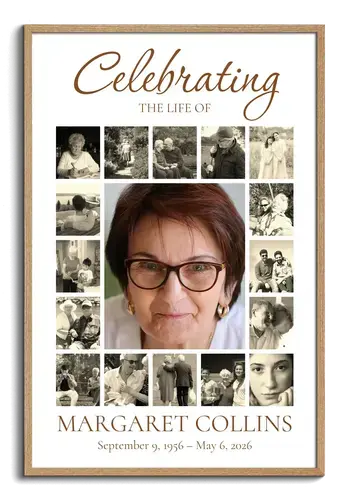
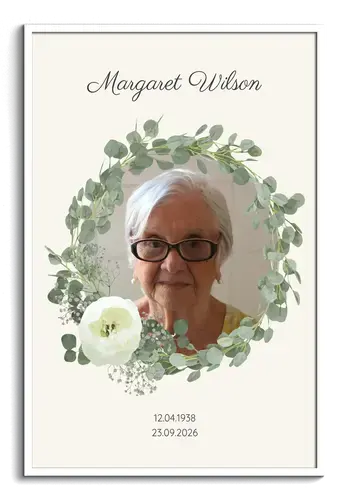
Choose a photo that shows your loved one as you want to remember them: with a gentle smile, wearing their favorite sweater, or sitting in their garden. A cropped family photo can work, too. Make sure the face is clearly visible and has enough room within the heart-shaped frame. Warm, natural photo colors feel soft; a black-and-white portrait creates a quiet contrast.
A Name That Feels Close
“Emma Williams” can stand on its own, as can a more personal tribute. Instead of a full name, try “Our Dear Mom,” “Grandma Elizabeth,” or “With Love, Anna.” Flowing script feels personal, while a simple font offers a more understated look. Keep longer phrases a little smaller.
A Few Words of Remembrance
If you prefer not to include birth and death dates, you can use those text fields for a few words:
- “Forever” · “in our hearts”
- “With love” · “and gratitude”
- “Missing you” · “every day”
This keeps the focus on the photo while your words honor the memory.
For Memorial Services and Funerals
A memorial portrait of your mother, grandmother, or another loved one can sit beside the guest book as you say goodbye. With their name and birth and death dates, it honors their memory and gives family and friends a place for quiet reflection.
As a Keepsake at Home
After the service, the portrait can find a place on a dresser or a personal memory wall. For you, your father, or your siblings, it can be a comforting reminder of a loved one—even when their resting place is far away.
For Remembering Together
On your loved one’s birthday or the anniversary of their passing, the memorial portrait can be part of a family gathering. Displayed on a memory table, it honors the person whose life connects you. Afterward, it remains part of the way you remember them at home.